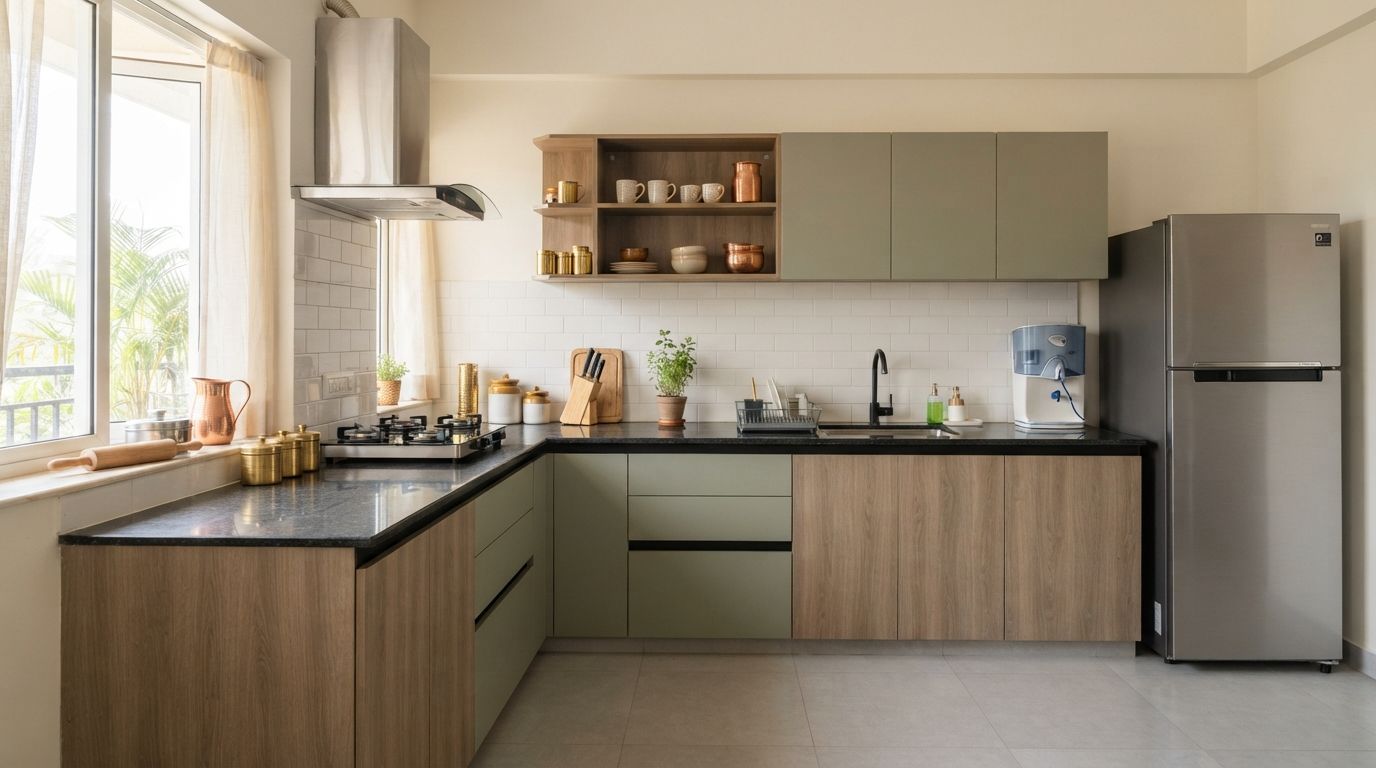
A modular kitchen renovation is the one interior line item almost every Indian homeowner budgets for wrong — usually low. Between the carcass, shutters, hardware, countertop, chimney, hob, sink and the appliances that follow, costs stack up fast, and a single vague quotation can hide ₹40,000–₹80,000 in "extras" that surface only at handover. This guide breaks the real 2026 numbers down by city, kitchen size and line item, so you walk into your first showroom meeting knowing what a fair quote looks like — and what a padded one is hiding.
What actually drives modular kitchen cost
Modular kitchens are priced per running foot of cabinetry (base + wall units), not per square foot of the room — a distinction that trips up first-time renovators comparing quotes. A quote for a straight 8 ft kitchen and an L-shaped 8+6 ft kitchen both cover "8 feet" only in the misleading sense; the L-shape is 14 running feet of cabinets. Always ask for the running-foot rate and the total running feet before comparing two quotations.
Four things move the number more than anything else: the carcass material (plywood vs MDF vs particle board), the shutter finish (laminate vs acrylic vs PU vs membrane), the hardware brand (Hettich/Blum vs unbranded), and whether the chimney, hob and sink are bundled in or priced separately. Get all four in writing before you sign.
City-wise cost: what a mid-range L-shaped kitchen actually runs
These are indicative 2026 ranges for a mid-range L-shaped kitchen (roughly 10×8 ft, ~14 running ft of cabinets, laminate shutters, branded hardware, chimney + hob included) — verify with 2–3 local quotes since city and even locality within a city shifts pricing.
| City | Budget tier | Mid-range | Premium |
|---|---|---|---|
| Mumbai / MMR | ₹2.2–3L | ₹3–4.5L | ₹5L+ |
| Delhi NCR | ₹2–2.8L | ₹2.8–4L | ₹4.5L+ |
| Bengaluru | ₹2.1–3L | ₹3–4.2L | ₹4.8L+ |
| Pune | ₹1.8–2.5L | ₹2.5–3.6L | ₹4.2L+ |
| Chennai / Hyderabad | ₹1.8–2.6L | ₹2.6–3.8L | ₹4.3L+ |
| Tier-2 cities | ₹1.4–2L | ₹2–3L | ₹3.5L+ |
Cost by kitchen layout and size
Layout changes the running-foot count more than the room's floor area does. Use this as a sanity check against any quote, at a working assumption of ₹1,800–2,400 per running ft for a solid mid-range spec (BWP plywood carcass, laminate shutters, branded hardware):
| Layout | Typical running ft | Cabinet cost range |
|---|---|---|
| Straight (single wall) | 7–9 ft | ₹1.3–2.2L |
| L-shape | 12–16 ft | ₹2.2–3.8L |
| Parallel (galley) | 14–18 ft | ₹2.5–4.3L |
| U-shape | 16–20 ft | ₹2.9–4.8L |
| Island add-on | +5–8 ft | +₹1–2L |
These figures cover cabinetry only. Countertop, sink, hob, chimney, electrical rework and appliances are separate line items — which is exactly where most budgets go wrong, because they get mentally lumped into "the kitchen quote" when they rarely are.
Line-item breakdown: where the money actually goes
| Item | 2026 cost range | Notes |
|---|---|---|
| Carcass (BWP plywood, per running ft) | ₹900–1,400 | Ask for the IS:710 grade stamp photographed on your boards |
| Shutters — laminate | ₹450–700/sq ft | Most durable-to-cost ratio for daily Indian cooking |
| Shutters — acrylic/PU | ₹900–1,600/sq ft | Better shine, shows fingerprints and scratches more |
| Hardware (hinges, channels, baskets) | ₹25,000–60,000 | Branded (Hettich/Blum/Ebco) vs unbranded is the single biggest quality lever |
| Countertop — granite | ₹150–350/sq ft | Budget-friendly, wide color range |
| Countertop — quartz | ₹450–900/sq ft | Non-porous, low maintenance, worth it near the sink |
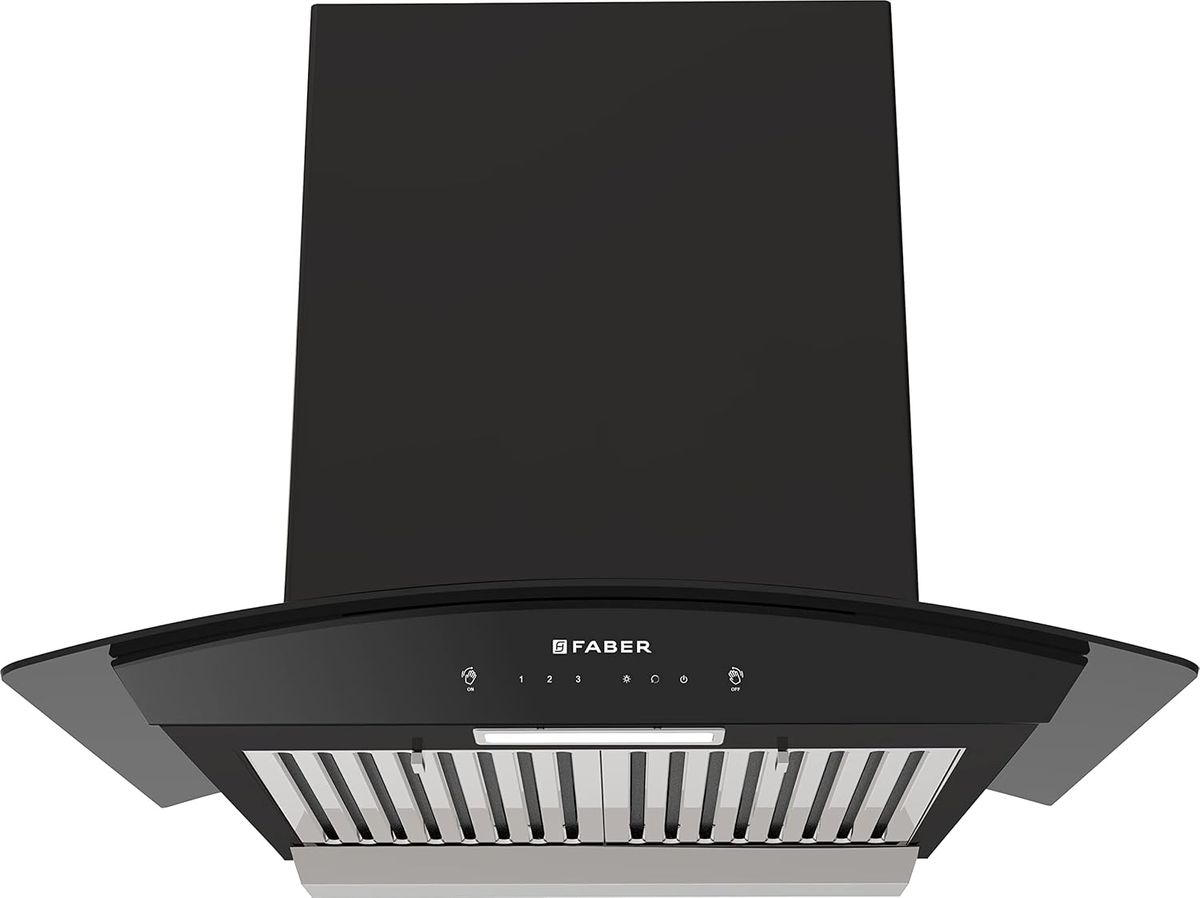
| Chimney (60cm, autoclean) | ₹9,000–22,000 | Size to your hob width and suction rating, not just brand |
| Hob (3–4 burner) | ₹6,000–18,000 | Toughened glass + brass burners for Indian cooking loads |
| Sink (single/double bowl, SS304) | ₹3,500–12,000 | 304-grade steel resists dents and staining far longer |
| Electrical rework (points, wiring) | ₹8,000–20,000 | Almost always underestimated in the first quote |
| Plumbing rework | ₹5,000–15,000 | Higher if the sink location is moving |
Our picks for this room


Appliances and essentials to budget for separately
Once the carcass and counters are decided, the kitchen still needs the daily-use essentials that rarely make it into the contractor's quote but always hit your card within the first month:
- A reliable autoclean chimney sized to your hob — undersized suction is the #1 reason Indian kitchen ceilings yellow within two years.
- A stainless steel pressure cooker in the 5L range for daily dal and rice.
- A 750W mixer grinder — Indian masalas and batters need more torque than imported models offer.
- A revolving spice rack to keep the counter clear once the modular units are in.
- Airtight storage containers sized to your new pantry unit's shelf depth.
- A full dinner set if the renovation coincides with a house move.
Budget ₹25,000–45,000 for this list if you're starting from scratch rather than reusing existing appliances.
Five ways to cut cost without cutting corners
- Keep the plumbing and electrical points where they already are. Moving the sink or hob location routinely adds ₹15,000–30,000 in rework that has nothing to do with the cabinets themselves.
- Spend on the carcass and hardware, save on the shutter finish. Laminate shutters on a solid BWP carcass with branded hinges will outlast acrylic shutters on a particle-board box, at a lower total cost.
- Skip the island unless the room genuinely supports it. An island needs 12×14 ft of clear floor to work; forced into a smaller room it becomes the single most-regretted line item in the quote.
- Get exactly three quotes, not one. The spread between the cheapest and most expensive quote for an identical spec is usually 25–35% — that gap is your negotiating room.
- Buy the chimney, hob and sink yourself if your vendor marks them up. Some fabricators add 15–20% on appliances routed through them; ask for the "supply only by owner" line item and compare.
Hidden costs people forget to budget for
Beyond the line items above, four costs surprise almost every first-time renovator: demolition and debris removal of the old kitchen (₹5,000–12,000), a temporary cooking arrangement for the 4–6 week install window, GST at 18% on most modular kitchen contracts (often quoted exclusive), and a 10% contingency for site-measurement corrections once the old kitchen comes down and the actual wall condition is visible. Add all four and a "₹3L quote" kitchen often lands closer to ₹3.5–3.7L in practice.
Frequently asked questions
Is a modular kitchen worth it over a carpenter-built one in 2026?
For most Indian homes, yes — modular kitchens use factory-cut, edge-banded boards that resist moisture and warping far better than site-cut carpentry, and the better hardware (soft-close hinges, ball-bearing channels) only comes standard with modular systems. Carpenter-built kitchens can still work well for very tight budgets if you personally supervise material grades on-site.
How long does a modular kitchen renovation actually take?
Plan for 4–6 weeks from final measurement to installation, plus 1–2 weeks of demolition and site prep before that if you're replacing an existing kitchen. Add a buffer week for custom sizes or imported hardware.
What is the cheapest way to get a modular look without full modular pricing?
Keep the existing carcass if it's structurally sound and replace only the shutters, hardware and countertop — this "shutter replacement" route typically costs 40–50% less than a full modular kitchen and refreshes the look completely.
Should the chimney and hob be included in the kitchen vendor's quote?
It's fine either way, but insist they're itemized separately with brand and model named, so you can price-check them independently rather than accepting a bundled number.