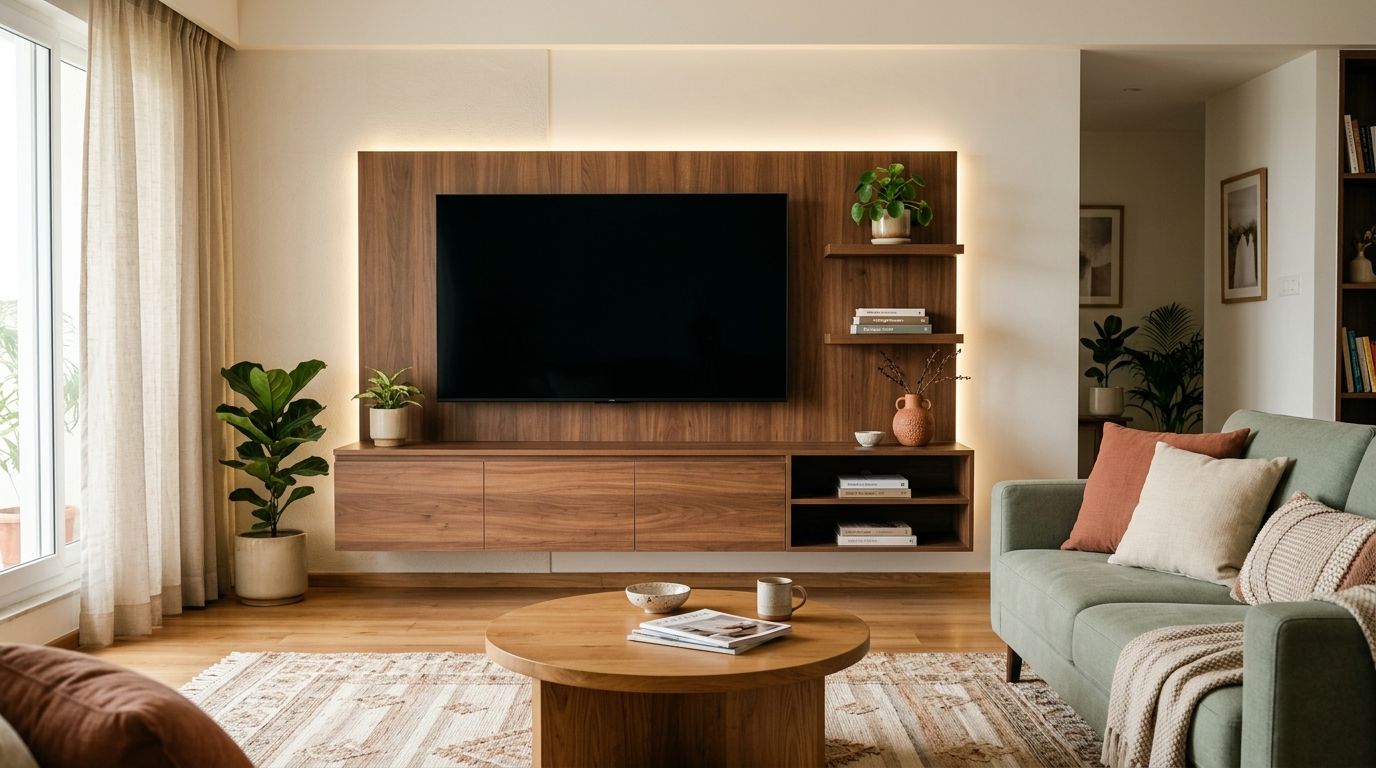
The TV unit is the one piece of furniture every living room needs, which is exactly why it's the easiest one to get wrong — too small and the room looks unfinished; too heavy and it swallows the space. Here's the complete 2026 picture for Indian living rooms: which style suits which room size, what materials actually cost, how to size the unit to your TV, and the lighting trick that makes a ₹15,000 unit look like a ₹50,000 one.
Every TV unit style, compared
| Style | ₹ cost (ready-made) | Best for | Watch out |
|---|---|---|---|
| Wall-mounted floating unit | ₹8,000–25,000 | Small rooms, modern look, easy cleaning | Needs a solid wall + proper anchors, not hollow partitions |
| TV unit + storage combo | ₹15,000–40,000 | Families needing to hide set-top boxes, toys, files | Can look bulky in rooms under 12 ft wide |
| Full media wall (custom carpentry) | ₹45,000–1,20,000 | Showcase living rooms, open-plan homes | Expensive to redo if trends change; commit carefully |
| Low console unit (legs, no wall mount) | ₹10,000–30,000 | Rental homes, rooms with weak walls | Collects dust underneath; harder to hide wiring |
| Panel-only (no unit, just a backdrop) | ₹6,000–20,000 | Minimalist small rooms, when storage isn't needed | No storage at all — plan a separate console elsewhere |
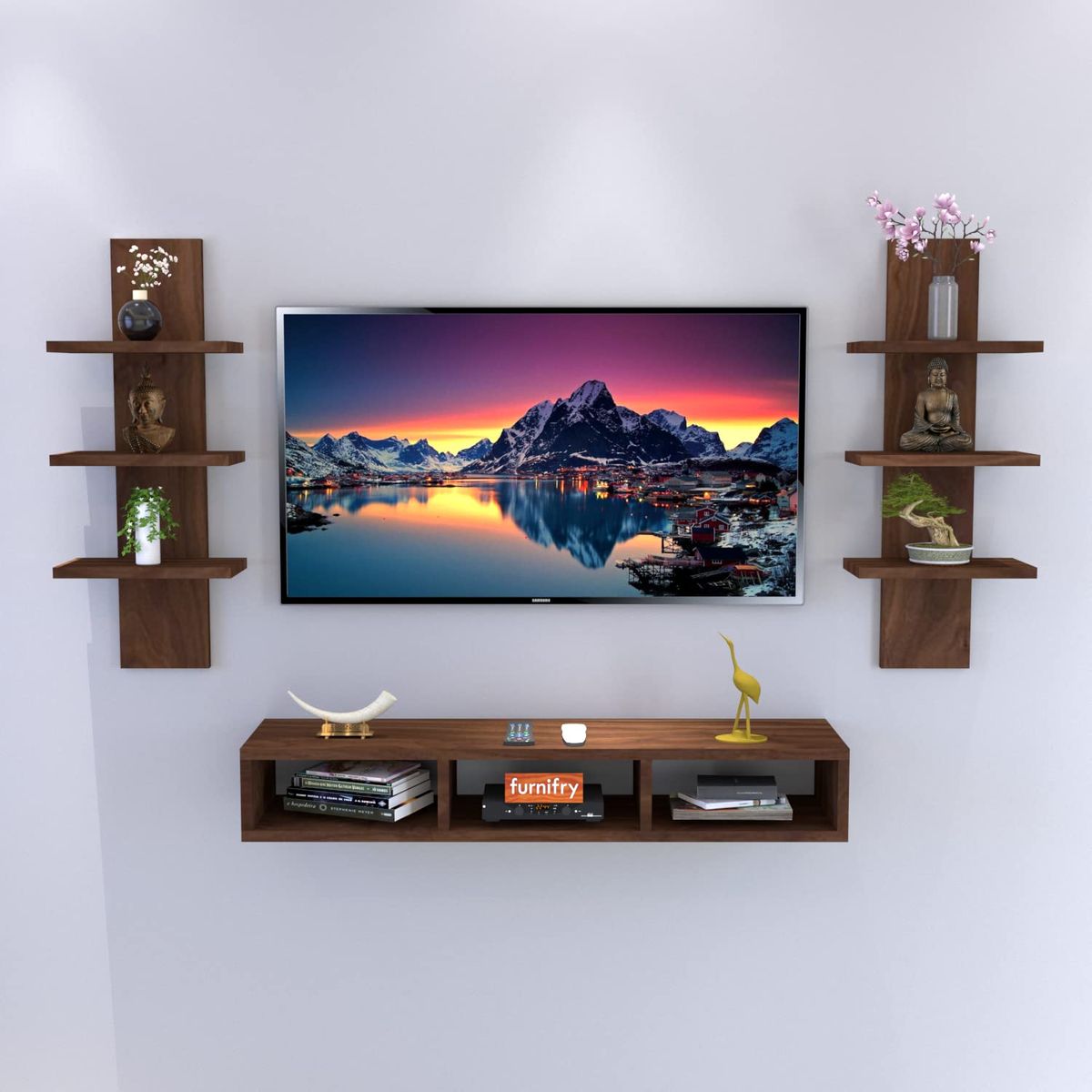
For most Indian 2 BHK living rooms, a wall-mounted floating unit with one closed storage bay hits the sweet spot: enough space for the router and remotes, none of the bulk of a full combo.
Sizing it to your TV and your wall
The most common mistake is buying a unit sized to the room instead of the TV. The working formula: unit width should be 1.5–2× the TV's diagonal width, and the TV's centre should sit at eye level for a seated person — usually 1,100–1,300 mm from the floor, lower than most installers default to.
| TV size | TV width (approx) | Recommended unit width | Ideal viewing distance |
|---|---|---|---|
| 43" | ~96 cm | 4.5–5.5 ft | 5.5–8 ft |
| 50" | ~112 cm | 5.5–6.5 ft | 6.5–9 ft |
| 55" | ~123 cm | 6–7 ft | 7–10 ft |
| 65" | ~145 cm | 7–8.5 ft | 8–12 ft |
If your sofa is closer than the minimum viewing distance for your TV size, go a size down — sitting too close is the most common regret buyers report after a TV upgrade.
Materials: what you're actually paying for
| Material | ₹/sq ft (carpentry) | Durability | Best for |
|---|---|---|---|
| Plywood + laminate | ₹1,400–2,000 | High — the standard choice | Most Indian homes; good value and termite resistance |
| MDF + veneer/laminate | ₹1,000–1,500 | Moderate — avoid in damp rooms | Budget builds, dry climates |
| Engineered wood + PU finish | ₹1,800–2,600 | High, premium look | Showcase media walls |
| Ready-made engineered wood units | Flat ₹8,000–25,000 | Good for the price | Renters, quick turnaround, no carpenter needed |
If you're not doing full carpentry, a solid ready-made option like the Furnifry wall-mounted TV unit with shelves covers the storage-plus-display need without a 5-day carpentry wait.
Design ideas by living room type
Small living rooms (under 140 sq ft)
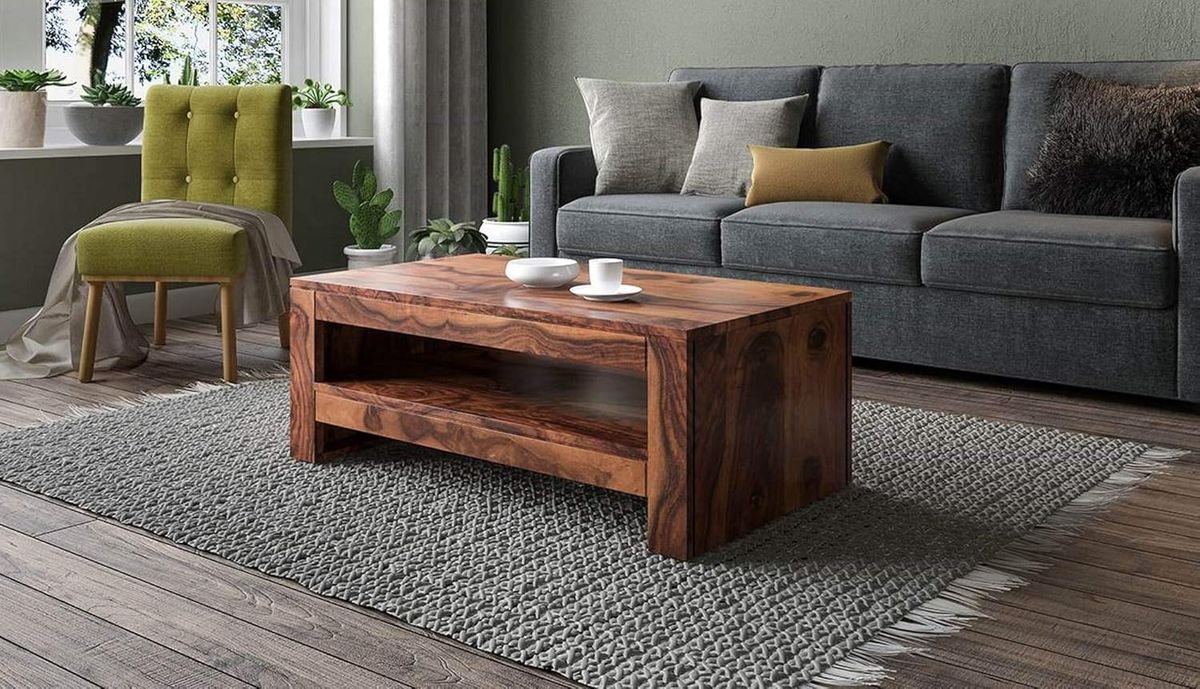
Skip the unit entirely if you can — a slim wall-mounted panel with one small floating shelf keeps the wall from feeling heavy. Pair with a compact sheesham coffee table instead of a large centre table so the floor stays visually open.
Rental homes
A low console unit on legs needs no wall drilling and moves with you. Add a 5×7 washable area rug under the seating to anchor the layout instead of permanent flooring changes.
Open-plan living-dining
Use the TV unit itself as the visual divider — a media wall that's finished on both faces (TV on one side, display shelving or a console on the dining side) does double duty without adding a partition wall.
Joint family / high-storage-need homes
Go with the combo style: closed cabinets at the bottom for files and linen, open display shelving at eye level, TV mounted above. Budget the full ₹35,000–45,000 range for a unit that genuinely replaces a separate storage cabinet.
From our shop
Decorate Your Home Like a Designer — The Complete Room-by-Room Guide
₹299 ₹999 70% off · instant PDF download
Our picks for this room
Lighting: the detail that upgrades a plain unit
- Backlight cove: a warm-white LED strip run behind the TV or along the top edge of the unit adds depth and reduces eye strain when watching in a dark room. The Philips CoveGlow warm-white strip is a simple stick-on retrofit for an existing unit.
- Shelf lighting: small puck lights inside open display shelves make décor pieces pop without lighting the whole wall.
- Skip the coloured RGB backlight behind the TV for daily use — it's striking in photos and tiring within a month of actual viewing.
What's current in 2026 (and what's dating fast)
- In: low-profile floating units, warm wood tones over high-gloss white, mixed open-and-closed storage, fluted or ribbed panel backdrops, integrated cable channels.
- Dating fast: full-height mirror-backed units, glossy black lacquer combos, oversized LCD showcase units built for box TVs, multicoloured RGB backlighting left on permanently.
- The safe bet: one clean material, one accent (wood slats, a stone-look panel, or a bold paint colour), and enough closed storage that the open shelves stay curated instead of cluttered.
Mistakes that make a TV unit look cheap
- Mounting the TV too high: installers default to eye level for a standing adult. For seated viewing, the centre of the screen should be closer to 1,100–1,300 mm from the floor.
- Visible wires: a unit without a cable cutout at the back looks unfinished the moment you plug in a set-top box. Ask for a routed cable channel before the unit is finalised, not after.
- No breathing room: leave at least 4–6 inches of clear wall on either side of the unit — a TV unit that spans wall-to-wall reads as cramped, not grand.
- Ignoring ventilation: set-top boxes and routers heat up. Closed cabinets need a back vent or gap; sealed boxes shorten device life.
- Matching everything too literally: a TV unit doesn't need to match the sofa wood tone exactly — a slight contrast (like a fabric sofa against a wood-tone unit) reads more designed than a perfectly matched set.
Styling the finished unit
Once the unit is installed, resist filling every shelf. A working rule: one large object (a vase or sculptural piece), one stack (books or boxes), and one plant per open shelf, with the rest left empty. A wooden wall clock with display shelf works well as the single statement piece above or beside the unit instead of crowding the TV shelf itself.
Sample costs for a full living room TV wall (2026, indicative)
| Scope | Style | Typical cost |
|---|---|---|
| Ready-made unit only | Wall-mounted, engineered wood | ₹8,000–25,000 |
| Custom carpentry unit | Plywood + laminate, storage combo | ₹25,000–45,000 |
| Full media wall | Custom carpentry + backlighting + paint/panel accent | ₹60,000–1,20,000 |
| Unit + styling (rug, cushions, décor) | Any style above | Add ₹5,000–12,000 |
Frequently asked questions
What is the standard height for a TV unit from the floor?
The unit base typically sits flush with the floor or on short legs (4–6 inches), but the important number is the TV's centre height, which should be 1,100–1,300 mm from the floor for comfortable seated viewing.
How wide should my TV unit be for a 55-inch TV?
Aim for 6–7 feet of unit width for a 55-inch TV, following the 1.5–2× TV-width rule, with at least 4–6 inches of clear wall on either side.
Is plywood or MDF better for a TV unit?
Plywood with laminate finish is the more durable and moisture-resistant choice for Indian homes; MDF is cheaper but should be avoided in rooms with humidity or near balcony doors.
Can I mount a TV unit on any wall?
Only solid brick or RCC walls take a wall-mounted unit safely. Hollow partition or drywall sections need a low console unit on legs instead, or additional structural backing before mounting.
How much does a custom TV unit cost in India in 2026?
Custom carpentry TV units typically cost ₹25,000–45,000 for a storage combo and ₹60,000–1,20,000 for a full media wall, depending on material and finish; ready-made units start around ₹8,000.
Should the TV unit match the sofa or flooring?
It doesn't need to match exactly — a slight tonal contrast between the unit, sofa, and flooring generally looks more intentional than an exact match across all three.