Creating a luxury bathroom that rivals the world’s finest spas is no longer reserved for celebrity homes and five-star hotels. Today’s leading interior designers are revolutionizing how we think about bathroom spaces, transforming them from purely functional rooms into sophisticated sanctuaries that blend artistry, wellness, and cutting-edge design. Whether you’re planning a complete renovation or seeking inspiration to elevate your existing space, the signature styles of renowned designers like Kelly Wearstler, Philippe Starck, and Victoria Hagan offer a masterclass in creating bathrooms that exude opulence, comfort, and timeless elegance.
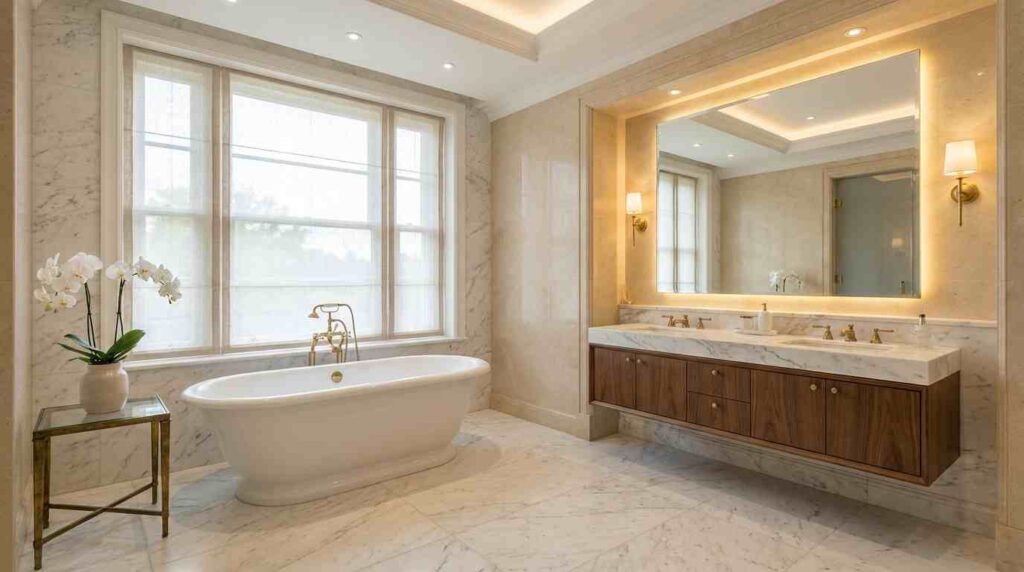
The most captivating luxury bathrooms share common threads: natural materials that connect us to the earth, sculptural fixtures that serve as functional art, spa-inspired features that promote wellness, and carefully curated color palettes that soothe the senses. In 2026, the trajectory of high-end bathroom design continues toward spaces that prioritize emotional impact and personal retreat over fleeting trends, with designers emphasizing simplified architecture, warm metallics, and biophilic elements that bring nature indoors.
Kelly Wearstler’s Bold Maximalist Approach
Kelly Wearstler has built her reputation on fearless design choices that push boundaries while maintaining an undeniable sense of sophistication. Her approach to luxury bathroom design centers on creating immersive experiences through bold material choices and sculptural elements that transform bathrooms into galleries of functional art.
Signature Elements
Wearstler’s bathrooms are instantly recognizable for their dramatic use of pattern and texture. She famously champions maximalist tile applications, covering floors, walls, and even ceilings in cohesive patterns that create an enveloping sense of grandeur. Her use of geometric wallcoverings in white and gold combinations, paired with statement gold wall mirrors, demonstrates how metallic accents can elevate a space from beautiful to breathtaking.
The designer’s material palette leans heavily on luxurious surfaces like honed verde antico marble, iridescent mother-of-pearl accents, and brushed brass fixtures. For countertops, she often specifies exotic materials like Cosentino’s Prexury Counter Slab in Petrified Wood, which brings organic patterns and natural beauty to vanity areas. Wearstler proves that luxury lies in the harmonious blend of timeless natural elements with sharp, contemporary forms, creating bathrooms that feel both grounded and utterly glamorous.
Her lighting choices are equally considered, with fixtures like the Jonathan Adler Meurice Five-Arm Sconce providing both illumination and sculptural interest. The key takeaway from Wearstler’s work is confidence—don’t be afraid to make bold statements with pattern, color, and material combinations that reflect your personality.
Philippe Starck’s Revolutionary Salon d’Eau Concept
Since 1994, French designer Philippe Starck has been transforming bathroom design through his groundbreaking collaborations with AXOR. His revolutionary “Salon d’Eau” concept—literally “water living room”—fundamentally challenged the notion that bathrooms should be purely functional, tile-covered spaces.
The Living Space Philosophy
Starck’s philosophy centers on creating bathrooms as living spaces characterized by natural materials, intuitive operation, and sensual design. His AXOR collections prioritize the experience of water itself, designing fixtures that dispense this precious resource without waste while offering tactile pleasure through thoughtful form and finish.
The AXOR Starck collection introduced iconic pieces like the groundbreaking joystick handle, which revolutionized how users interact with bathroom fixtures. His subsequent collections continued this innovation: AXOR Starck V features a removable spout crafted from crystal glass or porcelain, while the modular AXOR ShowerCollection allows for maximum personalization with minimum resource consumption.
Starck’s approach emphasizes that bathroom equipment must be flexible and adaptable to fulfill individual needs. Rather than imposing a singular aesthetic, he creates designs that serve as canvases for personal expression while maintaining clean lines and timeless appeal. His work demonstrates that true luxury bathroom design isn’t about following trends—it’s about creating spaces that enhance how we want to live, offering both freedom of style and thoughtful functionality.
Victoria Hagan’s Serene Classic Elegance
Victoria Hagan represents the American classical tradition reimagined for modern living. Her luxury bathrooms embody “quiet luxury,” where refined comfort, serene palettes, and sophisticated textures create spa-like sanctuaries that feel both timeless and utterly current.
Modern Classic Simplicity
Hagan’s bathroom designs are characterized by clean lines, tailored silhouettes, and neutral color palettes that prioritize light and tranquility. She masterfully layers luxurious materials like marble, polished limestone, and linen textures to create depth without visual clutter. Her primary bathrooms function as sanctuaries of light, texture, and calm, featuring freestanding soaking tubs positioned to capture natural light and carefully curated fixtures that blend seamlessly into the overall design.
The designer’s approach emphasizes connection to natural surroundings, often incorporating views and natural materials that blur the boundary between interior and exterior spaces. Lighting is paramount in Hagan’s work—she layers ambient, task, and accent lighting to create flexible atmospheres that transition from energizing morning routines to relaxing evening rituals.
Hagan’s spaces never feel trendy or overdone. Instead, they achieve a sense of established elegance through thoughtful selection of antique elements mixed with custom-designed pieces, creating bathrooms that feel personal, comfortable, and timelessly sophisticated. Her work proves that luxury doesn’t require constant visual stimulation—sometimes the most opulent spaces are those that offer visual calm and sensory serenity.
Essential Elements of Designer-Inspired Luxury Bathrooms
| Design Element | Key Features | Designer Association | Estimated Investment | Impact on Space |
|---|---|---|---|---|
| Natural Stone Surfaces | Carrara marble, Calacatta marble, travertine, limestone, honed finishes | All designers | High ($5,000-$20,000+) | Creates organic luxury, unique patterns, timeless appeal |
| Freestanding Soaking Tub | Stone resin, acrylic, copper; sculptural centerpiece | Starck, Hagan | High ($2,000-$10,000+) | Serves as focal point, enhances relaxation ritual |
| Multi-Function Shower System | Rain showerheads (8-16″), body sprays, handheld options | Starck, Wearstler | Medium to High ($1,500-$8,000) | Creates spa experience, therapeutic benefits |
| Statement Tile Applications | Geometric patterns, zellige, large format, herringbone | Wearstler | Medium ($2,000-$8,000) | Adds visual drama, defines style personality |
| Warm Metallic Fixtures | Brushed brass, satin brass, brushed gold, aged brass | Wearstler, Hagan | Medium ($800-$4,000) | Provides warmth, sophistication, timeless elegance |
| Integrated LED Lighting | Backlit mirrors, under-cabinet lighting, recessed fixtures | All designers | Low to Medium ($500-$3,000) | Enhances ambiance, functionality, modern feel |
| Floating Vanities | Wall-mounted, clean lines, integrated storage | Starck, Hagan | Medium ($1,500-$6,000) | Creates spaciousness, contemporary aesthetic |
| Heated Floors | Radiant heating systems, quick-dry functionality | All designers | Medium ($1,000-$5,000) | Adds comfort, prevents water pooling, luxury feel |
Material Selection: The Foundation of Luxury
The materials you select fundamentally determine whether your bathroom feels genuinely luxurious or simply expensive. Top designers consistently gravitate toward natural materials that offer both visual beauty and tactile pleasure.
Stone and Marble
Natural stone remains the gold standard for luxury bathrooms. Carrara and Calacatta marble provide classic elegance with their distinctive veining patterns, while travertine and limestone offer warmer, more organic textures. For those seeking sustainable alternatives, mineral composite stone (stone resin) provides the look of natural stone with enhanced durability and eco-friendly production methods.
Wood Elements
Water-resistant woods like teak, cedar, and oak are dominating bathroom remodel trends, appearing in everything from vanity cabinets to decorative wall slats. Wood introduces warmth and biophilic connection, softening the hard surfaces typically associated with bathrooms while maintaining durability in humid environments.
Artisan Tiles
Zellige tiles—handcrafted from natural, unrefined clay—bring artisanal character and subtle color variation to shower walls and backsplashes. While more fragile than porcelain, their unique glazed finishes and handmade quality create visual interest that mass-produced tiles simply cannot match.
Color Palettes That Define Luxury
Gone are the days when luxury bathrooms defaulted to stark white. The most sophisticated spaces in 2026 embrace warm neutrals and earthy tones that create tranquil, inviting atmospheres.
Designers recommend warm whites, creamy off-whites, soft taupes, and beiges as foundation colors, often incorporating accent tones like sage green, muted purple, or dusty blue for depth. These palettes enhance the natural beauty of stone and wood while creating psychological calm that transforms bathrooms into genuine retreats.
For those drawn to bolder statements, Kelly Wearstler’s work demonstrates how geometric patterns in black and white, or rich gold and white combinations, can create drama without sacrificing sophistication. The key is ensuring that even bold color choices feel intentional and cohesive rather than chaotic.
Spa-Inspired Features for Wellness-Focused Design
The most compelling luxury bathrooms in 2026 prioritize wellness and daily ritual, incorporating features traditionally found only in high-end spas.
- Rain Showerheads and Body Sprays: Large-diameter rain heads (8-16 inches) create immersive, full-body cascades that promote deep relaxation
- Steam Shower Systems: Release warm vapor for skin purification, muscle tension relief, and luxurious warmth
- Heated Flooring: Radiant heating provides comfort, quickly dries wet surfaces, and adds functional luxury
- Freestanding Soaking Tubs: Deep-immersion tubs crafted from stone resin, acrylic, or copper serve as sculptural focal points while providing therapeutic benefits
- Towel Warmers: Simple additions that bring spa-like comfort to daily routines without major renovation
- Integrated Shower Seating: Built-in benches transform showers into relaxation spaces rather than purely functional areas
These features work synergistically to create bathrooms that support both physical wellness and emotional restoration, reflecting the broader cultural focus on self-care and home-based wellness experiences.
Lighting Design: Setting the Mood
Strategic lighting distinguishes truly luxurious bathrooms from merely attractive ones. Designers like Victoria Hagan emphasize layered lighting that serves multiple functions throughout the day.
Start with backlit mirrors, which provide flattering task lighting for grooming while adding modern sophistication. Add recessed LED fixtures for general ambient illumination, ensuring even light distribution without harsh shadows. Incorporate statement fixtures—whether retro-inspired pendants or contemporary sconces—that serve as jewelry for the room while casting warm, inviting light.
Dimmer switches are non-negotiable in luxury bathrooms, allowing you to transition from bright, energizing morning light to soft, relaxing evening ambiance. Color-changing LED systems take this flexibility further, enabling you to adjust the mood at will.
Natural light remains the most valuable lighting source. If your bathroom has windows, celebrate them with treatments that preserve privacy while maximizing daylight. If natural light is limited, consider whether structural changes like adding skylights could fundamentally transform the space.
Sustainable Luxury: Eco-Conscious Design Choices
The foundation of contemporary luxury bathroom design increasingly embraces sustainability, blending environmental consciousness with uncompromising elegance.
Forward-thinking designers specify rapidly renewable materials like bamboo for vanities and shelving, noting that this grass can grow up to 35 inches per day. They choose mineral composite stone produced through environmentally responsible practices as alternatives to quarried marble. They incorporate upcycled and vintage elements—from reclaimed porcelain tiles to antique farmhouse sinks—that add character while reducing environmental impact.
Water conservation features have become standard in high-end bathrooms. Low-flow toilets and WaterSense-certified showerheads dramatically reduce water consumption without compromising performance. Philippe Starck’s AXOR collections exemplify this philosophy, delivering maximum function with minimum resource consumption through thoughtful engineering.
LED lighting uses up to 90% less energy than traditional bulbs and lasts decades longer, making it both an environmental and economic investment. When integrated into mirrors, cabinets, and architectural features, LEDs provide sophisticated illumination while supporting sustainability goals.
Storage Solutions: Minimalist Organization
Luxury bathrooms maintain their serene atmosphere through clever storage that keeps visual clutter hidden. Floating vanities have become a hallmark of high-end design, offering generous concealed storage while creating an illusion of spaciousness through visible floor space beneath.
Built-in niches in shower areas provide functional storage for toiletries without disrupting clean lines. Medicine cabinets with integrated LED lighting serve triple duty as mirrors, storage, and light sources—particularly valuable in smaller bathrooms where every element must work harder.
The goal is to create spaces where every daily necessity has a designated, concealed location, allowing the bathroom’s design elements—sculptural tubs, beautiful tiles, elegant fixtures—to command attention without competition from everyday clutter.
Achieving Designer Style: Budget-Conscious Approaches
Creating a luxury bathroom inspired by top designers doesn’t require unlimited resources. Strategic investments in high-impact areas can deliver sophisticated results even within moderate budgets.
Prioritize materials that directly touch the body—shower fixtures, tub surfaces, flooring—as these most directly impact your daily experience. A remarkable rainfall showerhead and quality stone flooring will transform your routine more than expensive wallpaper.
Select one or two statement elements that define the room’s character, whether that’s a stunning freestanding tub, dramatic tile application, or custom vanity with unique countertop material. Surround these stars with well-chosen but more affordable supporting elements.
Consider DIY-friendly updates that deliver significant visual impact: replacing outdated fixtures with warm brass alternatives, installing LED strip lighting, painting walls in sophisticated warm neutrals, or adding wood accents through floating shelves or custom-framed mirrors.
For approximately $10,000, you can complete a substantial luxury bathroom remodel that incorporates several designer-inspired elements. The key is thoughtful planning that balances quality materials in key areas with budget-conscious choices where they’ll have less impact on the overall experience.
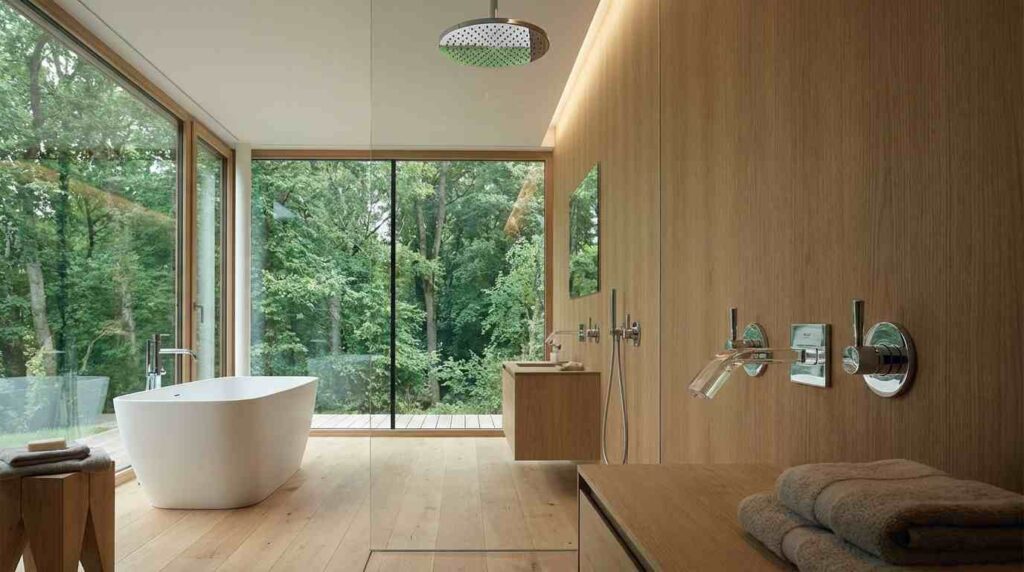
The Future of Luxury Bathroom Design
As we move through 2026, luxury bathroom design continues evolving toward spaces that nurture lifestyle and wellness goals rather than simply displaying wealth. The most compelling bathrooms blend sophisticated aesthetics with universal design features—like walk-in showers with barrier-free access—that ensure long-term usability without compromising visual elegance.
Simplified architecture is replacing the busy ceilings and visual clutter of previous decades. Clean, unified lines bring calm and order to daily routines, reflecting our collective desire for spaces that reduce stress rather than create it. Technology integration continues advancing, with smart lighting systems, digital shower controls, and heated surfaces becoming standard expectations rather than luxury upgrades.
The designers leading this evolution—Wearstler with her bold artistic vision, Starck with his focus on human-centered functionality, and Hagan with her serene classical approach—all demonstrate that true luxury transcends trends. Their work creates bathrooms that feel personal, comfortable, and timelessly beautiful, regardless of when they were designed.
Frequently Asked Questions
Q: What are the key differences between Kelly Wearstler, Philippe Starck, and Victoria Hagan’s bathroom design approaches?
A: Kelly Wearstler embraces bold maximalism with dramatic patterns, exotic materials, and sculptural elements that create immersive gallery-like spaces. Philippe Starck focuses on revolutionary functionality, creating bathrooms as “living rooms” with intuitive fixtures and minimal visual clutter. Victoria Hagan champions serene American classical style with neutral palettes, luxurious natural materials, and quiet elegance that prioritizes comfort and tranquility.
Q: How much does a luxury bathroom renovation typically cost in 2026?
A: Luxury bathroom remodels typically range from $10,000 to over $50,000, depending on size, material quality, and scope of work. Most projects cost between $100 and $500 per square foot, with high-end renovations featuring natural stone, custom fixtures, and advanced systems falling at the upper end of this range. Labor represents 10-20% of total costs, so selecting fixtures compatible with existing plumbing can reduce expenses.
Q: What are the most important features to include in a spa-inspired luxury bathroom?
A: Essential spa features include a large rain showerhead (8-16 inches), heated flooring for comfort and quick drying, a freestanding soaking tub as a sculptural centerpiece, warm metallic fixtures in brass or gold finishes, layered LED lighting with dimmer controls, and natural stone surfaces. Additional elements like steam showers, built-in shower seating, and towel warmers further enhance the spa experience.
Q: Which bathroom materials are both luxurious and sustainable?
A: Mineral composite stone (stone resin) offers the appearance of natural marble with eco-friendly production and superior durability. Rapidly renewable bamboo works beautifully for vanities and shelving. Reclaimed or upcycled materials like vintage porcelain tiles add character while reducing waste. Water-resistant woods like teak, cedar, and oak from sustainably managed forests provide warmth with environmental responsibility. Zellige tiles made from natural clay through traditional artisan methods combine sustainability with unique beauty.
Q: Are floating vanities practical for luxury bathrooms?
A: Floating vanities are both highly practical and aesthetically sophisticated in luxury bathrooms. They create visual spaciousness by revealing floor space beneath, simplify cleaning, and provide modern elegance through clean lines. When properly installed with quality wall mounting hardware, they offer the same storage capacity and countertop space as floor-standing vanities while contributing to the minimalist, uncluttered aesthetic that defines contemporary luxury design.
Q: What bathroom colors are trending for luxury designs in 2026?
A: Warm neutrals dominate luxury bathroom palettes in 2026, including creamy whites, soft taupe, warm beiges, and earthy tones inspired by the “Desertcore” aesthetic. Sage green, muted purple, and dusty blue serve as sophisticated accent colors. These palettes create psychological calm while highlighting the natural beauty of stone and wood materials. Stark bright white is declining in favor, while pure black is used sparingly to avoid making spaces feel cave-like.
Q: How can I incorporate designer-inspired luxury into a small bathroom?
A: Small bathrooms benefit tremendously from designer principles. Install a floating vanity to maximize visual space, use large-format tiles to reduce grout lines and create visual continuity, add a backlit mirror for both function and modern sophistication, and choose a cohesive pattern applied to walls and ceilings (à la Kelly Wearstler) to create an enveloping, intentional feel. Focus your budget on one statement element like a stunning tile pattern or sculptural sink, then surround it with quality basics in warm neutrals.
Q: What’s the difference between a luxury bathroom and a standard bathroom?
A: Luxury bathrooms prioritize experience over pure function, incorporating spa-like features (rain showers, heated floors, soaking tubs), superior natural materials (marble, stone resin, quality woods), thoughtful lighting design with multiple layers and dimming capability, warm metallic fixtures, and meticulous attention to storage that eliminates visual clutter. They’re designed as personal sanctuaries for wellness and relaxation rather than simply functional spaces for hygiene, with every element curated to enhance daily rituals.
Conclusion
Creating a luxury bathroom inspired by top designers requires more than simply purchasing expensive fixtures—it demands a holistic vision that considers materials, lighting, functionality, and emotional impact. Whether you’re drawn to Kelly Wearstler’s bold artistic statements, Philippe Starck’s revolutionary living space approach, or Victoria Hagan’s serene classical elegance, the principles remain consistent: prioritize quality natural materials, invest in spa-inspired features that enhance wellness, create layered lighting for flexible ambiance, and maintain clean lines that allow beautiful elements to shine.
Your bathroom should be a daily sanctuary that reflects your personal style while offering genuine respite from the demands of modern life. By incorporating designer-inspired elements thoughtfully and strategically, you can transform this essential space into a luxurious retreat that elevates every morning routine and evening ritual. Start with one or two signature pieces that speak to your aesthetic, build around them with quality basics, and don’t be afraid to let your bathroom express the same personality and style that defines the rest of your home.