Martha Stewart has spent decades perfecting the art of creating homes that feel both elegantly refined and genuinely welcoming. Her interior design philosophy centers on a simple yet powerful idea: your home should reflect not just how you want it to look, but how you want to live. From her iconic Bedford farmhouse to countless design projects spanning kitchens, living rooms, and bedrooms, Martha’s signature style blends classic American traditional aesthetics with clean, contemporary functionality. This comprehensive guide explores how to bring Martha Stewart’s timeless design sensibility into your own home, room by room.
Martha Stewart Home Interior Design Philosophy: Where Beauty Meets Function
Martha Stewart’s approach to interior design stands apart from trend-driven decorating because it prioritizes intention over aesthetics alone. Rather than filling spaces with decorative objects, she encourages homeowners to first understand how each room serves the people who use it. This means considering lifestyle, daily routines, family needs, and the emotional experience of being in a space before selecting a single piece of furniture or paint color.
Her design philosophy embraces the principle that homes must withstand real life—cooking, pets, children, guests, and everyday wear. This practical approach integrates smart storage solutions, durable materials, comfortable seating, easy-to-clean textiles, and layouts with open flow. A beautiful room that feels restrictive or too precious to actually use isn’t successful in Martha’s view; it becomes another source of stress rather than a sanctuary.
Designing With Timeless Sensibility
The Martha Stewart aesthetic combines soft neutrals with natural materials to create spaces that feel calm, complete, and rich in texture. There’s nothing overly ornate or fussy about her interiors, yet they feel curated and sophisticated. Her commitment to craftsmanship feels increasingly rare in today’s world of mass production, with an emphasis on quality pieces that will endure for years.
Signature Design Elements That Define the Look
Understanding Martha Stewart’s signature design hallmarks helps you recreate her aesthetic authentically. These foundational elements appear consistently across all her projects, from grand estates to cozy cottages.
The Art of Color Mastery
One of Martha’s most iconic traits is her mastery of color. She works primarily with a palette of soft neutrals—creamy whites, flax linen, oatmeal, dove gray, and subtle blues—that evoke calm and understated luxury. These classic tones are rooted in historical design traditions, but Martha updates them with crisp whites and strategic bold accents when needed. Her Bedford farmhouse exterior, painted in a warm greige that changes subtly with natural light, exemplifies this sophisticated approach to neutral color.
While neutrals dominate, Martha isn’t afraid of richer hues when appropriate. She has recently embraced warm grays and even experimented with sophisticated burnt orange paired with teal for dining spaces, proving her style evolves while remaining timeless.
Room-by-Room Design Inspiration
Living Rooms: Refined Yet Inviting Gathering Spaces
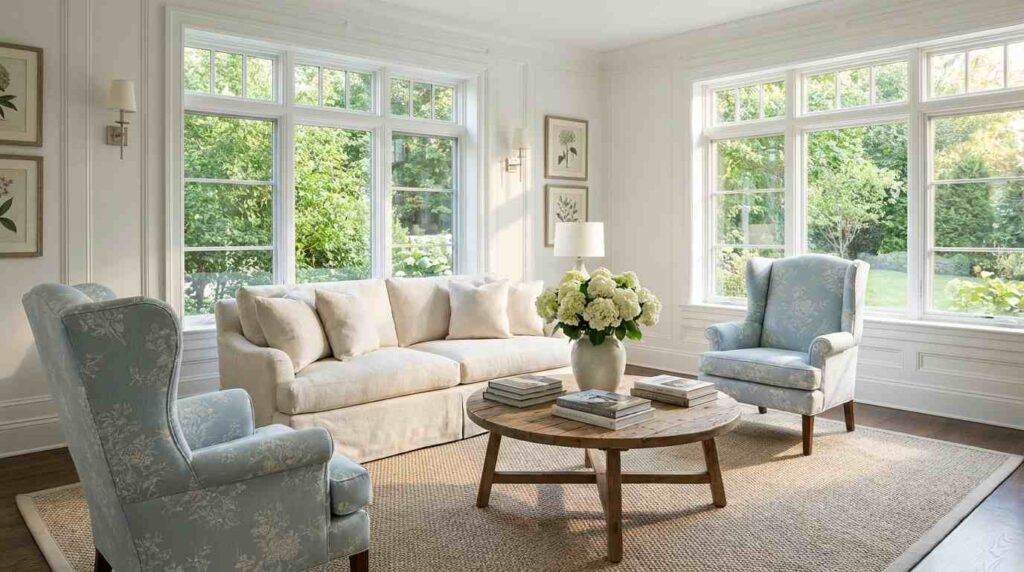
Martha Stewart’s living rooms strike the perfect balance between elegance and comfort. In her Bedford home, refined pale blue chairs with elegant patterns set a sophisticated tone while remaining inviting. Multi-pane windows bring in abundant natural light and offer views of the gardens outside, connecting interior spaces with nature.
Key elements for achieving this look include cozy seating arrangements with slipcovered sofas in natural linen, layered textiles through throw pillows and soft blankets, and elegant lighting that creates warm ambiance. Rather than cluttering spaces with numerous decorative items, Martha selects a few impactful pieces—perhaps ironstone pottery groupings, stacked books, or a statement floral arrangement. Rattan accents, natural fiber rugs, and wooden furniture with visible grain add organic warmth.
Kitchens: The Functional Heart
Martha Stewart’s farmhouse-style kitchen embodies her entire lifestyle brand: functional, organized, and beautiful. Her Bedford kitchen features classic elements including open shelving, cream-colored beadboard joinery, a freestanding range, and subway tiles in soft neutral shades. Dark accents in the countertops and floors create visual contrast against the light cabinetry.
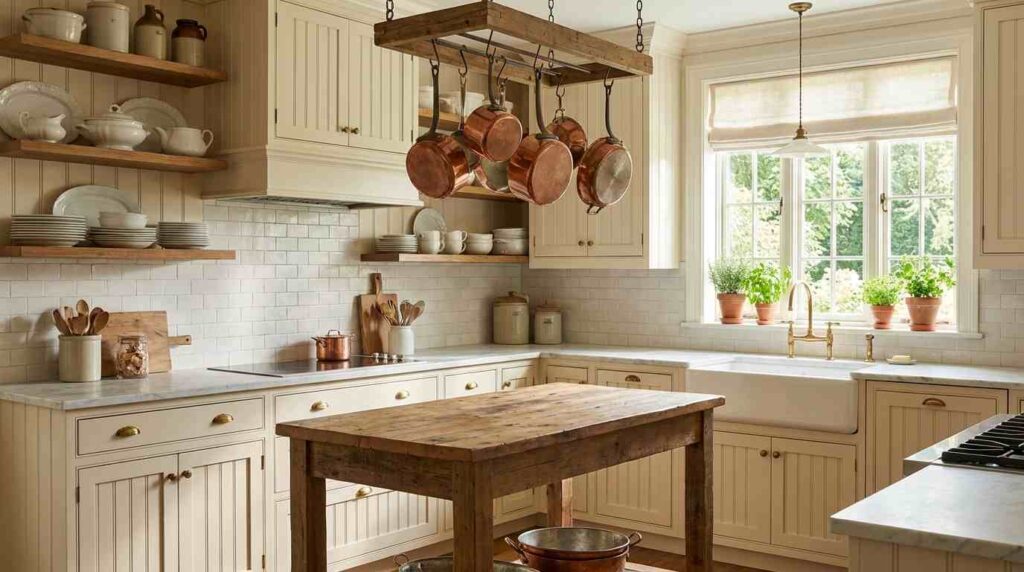
These kitchens always reflect the personality of a serious cook. Roomy islands provide workspace and gathering areas, open shelving displays vintage dishware and copper cookware, pot racks keep essentials accessible, and thoughtful zones separate baking, prepping, and serving functions. Marble countertops, wooden islands, and windows overlooking gardens fill the space with natural light and warmth. The key is balancing charm with practicality through farmhouse influences and contemporary utility.
Dining Rooms: Rustic Elegance
In Martha’s dining spaces, rustic elements harmonize beautifully with refined touches. Wooden dining tables and chairs pair with elegant accessories like calming green vases, urns, and carefully curated place settings. Her approach to dining emphasizes creating beautiful yet relaxed settings for entertaining thoughtfully. Even weeknight dinners become special occasions with cloth napkins, candlelight, and fresh flowers.
Bedrooms: Serene Retreats
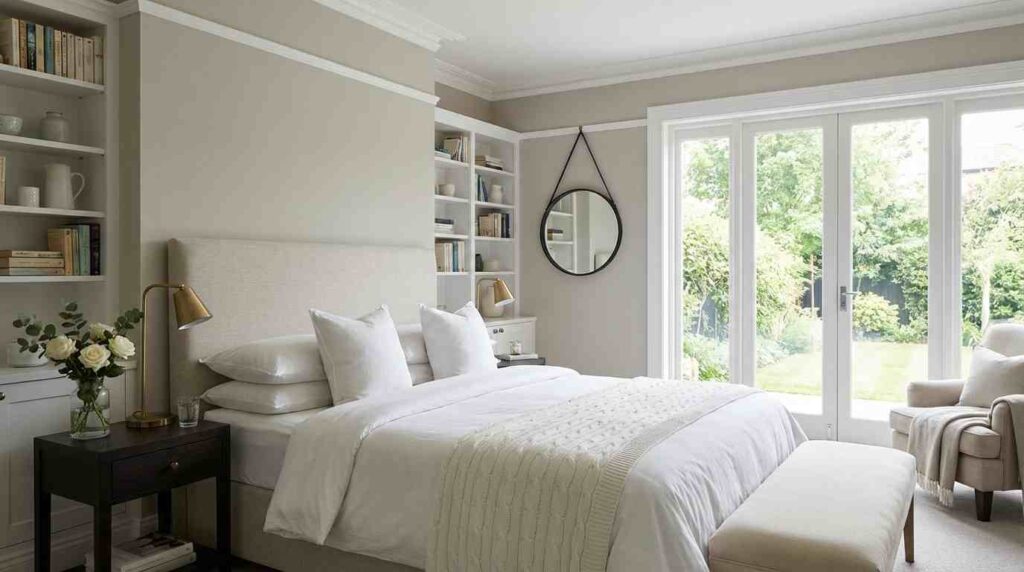
Martha Stewart’s bedroom designs focus on creating serene, restful environments that blend utility with pleasure. Her signature bedroom style features layered bedding with high-quality linens, tailored headboards, upholstered benches at the foot of beds, and bedside tables styled with elegant lamps, fresh-cut flowers, and carefully chosen books.
In her Bedford home, bedrooms showcase elegant simplicity with neutral walls, white doors and frames, and black accents in mirrors and bed frames providing contrast. Built-in bookshelves behind beds and wall-mounted reading lights create cozy reading nooks. Glass-paneled windows transform these spaces into idyllic retreats with views of surrounding gardens. Writing desks positioned by windows and vintage armchairs complete the lived-in luxury aesthetic.
Outdoor Living Spaces
Martha’s design sensibility extends seamlessly outdoors with glowing verandas, lush gardens with white pergolas, and thoughtfully arranged outdoor furniture. Front steps might feature simple seasonal decorations like rows of pumpkins, proving you don’t need to overcomplicate outdoor styling. Wreaths made from natural elements with neutral-colored ribbons tie into the home’s overall color scheme.
Martha Stewart’s Signature Styling Techniques
The Art of Vignette Creation
Martha excels at creating curated vignettes—small decorative arrangements on consoles, mantels, sideboards, and coffee tables. Her signature styling includes ironstone and pottery groupings, stacked books, woven baskets, topiaries, and fresh florals that create a refined yet welcoming feel. The technique involves styling in groups of three with varied heights and textures for balanced compositions.
Simple Elegance Through Editing
One hallmark of Martha’s style is her commitment to simple elegance—rooms that never feel cluttered yet feel complete. Rather than relying on numerous decorative objects, she selects a few impactful pieces where every object has a purpose and place. This editing philosophy means fewer, larger pieces that read as calmer and more elevated than collections of small items.
Seasonal Refresh Strategy
Martha refreshes rooms seasonally without full redecoration through strategic swaps. Wreaths, branches, and fresh greenery change with the seasons, while candlelight, glass cloches, and simple ribbons add festive touches. Keeping a neutral base allows you to introduce seasonal color through flowers, decorative pillows, and table linens without overwhelming the space.
How to Achieve Martha Stewart Style in Your Home
Start With Quality Basics
Invest in timeless foundation pieces rather than trendy items. Choose quality basics like linen drapes, natural fiber rugs, and solid wood furniture. Let patina-rich wood and handcrafted ceramics add character over time. These investment pieces form the backbone of your design and will serve you for decades.
Layer Natural Textures
Create depth by layering multiple natural textures—linen throw pillows on cotton upholstery, sisal rugs under wooden furniture, ceramic vases on stone countertops. This layering technique adds visual interest while maintaining the calm, organic aesthetic central to Martha’s style.
Embrace DIY and Handcrafted Elements
Martha’s style celebrates personal touches and handcrafted details. Repurpose jars as vases, use fabric scraps for DIY napkins, create seasonal wreaths from gathered greenery, or add handwritten labels to pantry jars. The key isn’t perfection but thoughtfulness—these personal elements make a house feel like your home.
Prioritize Organization as Design
Beautiful storage that doubles as decor exemplifies Martha’s functional beauty principle. Deep drawers, labeled jars, woven baskets, and open shelving keep homes organized while contributing to the overall aesthetic. Every organizational element should be attractive enough to display proudly.
Connect Indoors With Nature
Bring the outdoors in through fresh flowers, botanical prints, houseplants, and herbs in every room. These elements aren’t just accessories—they’re essential components that add vibrancy, color, and life. Consider using floral wallpaper in powder rooms or placing small potted herbs in your kitchen to strengthen this indoor-outdoor connection.
Budget-Friendly Ways to Channel Martha’s Aesthetic
You don’t need unlimited resources to embrace Martha Stewart’s design philosophy. Focus on key elements that deliver maximum impact:
- Paint transforms spaces affordably: Choose sophisticated neutral colors like warm greige, soft dove gray, or creamy white for walls
- Thrift stores offer hidden gems: Look for vintage dishware, ironstone pottery, wooden furniture, and picture frames that can be refreshed with paint
- Fabric updates create new looks: Slipcover existing furniture, sew simple throw pillows, or create custom table linens in classic patterns
- Greenery costs little: Grocery store flowers arranged in repurposed jars, clippings from your yard, or inexpensive houseplants add Martha’s signature garden connection
- Organizational supplies become decor: Invest in attractive baskets, glass jars, and wooden crates that store belongings beautifully
The Martha Stewart approach values thoughtfulness over extravagance. Small, intentional touches—ironing pillowcases, setting tables with cloth napkins for weeknight dinners, lighting candles before meals, organizing pantries with labeled containers—elevate everyday living without significant expense.
Design Principles for Long-Term Satisfaction
Choose Timeless Over Trendy
Martha consistently advises investing in classic pieces rather than following fleeting trends. A well-made slipcovered sofa in neutral linen will serve you beautifully for decades, while a trendy colored sectional may feel dated within years. This approach proves more economical long-term and creates homes with enduring appeal.
Design for Your Actual Life
The most important principle underlying Martha’s entire design philosophy is creating spaces that support how you actually live. If you have young children, prioritize durable, washable fabrics over precious silks. If you love cooking, invest more heavily in kitchen functionality than formal dining room furniture. Your home should reduce stress, not create it.
Maintain Balance Between Elegance and Comfort
Every Martha Stewart space balances sophistication with livability. Beautiful homes that function as museums rather than living spaces fail to achieve this critical equilibrium. Your sofa should be elegant enough to impress guests yet comfortable enough for Sunday afternoon naps. Your kitchen should be organized beautifully yet functional enough for serious cooking. This balance defines the Martha Stewart aesthetic more than any specific furniture piece or color choice.
Frequently Asked Questions
Q: What colors does Martha Stewart use most in her interior designs?
A: Martha Stewart primarily uses soft neutrals including warm beiges, greige, oatmeal, dove gray, creamy whites, and subtle blues. She layers these calming tones with natural materials and adds garden-inspired accents through soft greens and occasional bold touches like burnt orange or teal. Her approach creates serene, timeless spaces that won’t feel dated.
Q: How can I make my home look like Martha Stewart’s on a budget?
A: Focus on affordable high-impact changes like painting walls in sophisticated neutrals, shopping thrift stores for vintage finds that can be refreshed, adding inexpensive greenery and fresh flowers, creating DIY elements like handwritten labels or fabric napkins, and investing in attractive organizational containers that function as decor. Martha’s style prioritizes thoughtfulness over expense.
Q: What is Martha Stewart’s signature kitchen style?
A: Her signature kitchen style features cream or white cabinetry with beadboard details, open shelving displaying vintage dishware and copper cookware, marble or stone countertops, wooden islands, farmhouse sinks, subway tile backsplashes, and abundant natural light. The design balances traditional charm with modern functionality and serious cook-friendly layouts.
Q: What type of furniture does Martha Stewart prefer?
A: Martha prefers classic furniture silhouettes including slipcovered sofas in natural fabrics, wingback chairs, farmhouse dining tables, tailored upholstered headboards, and wooden pieces with visible grain. She blends traditional forms with clean, contemporary lines and always prioritizes quality construction over trendy styles. Every piece should be both beautiful and genuinely comfortable for daily use.
Q: How does Martha Stewart incorporate nature into interior design?
A: She treats plants and flowers as essential design components rather than optional accessories. Fresh flower arrangements appear in every room, botanical prints and floral patterns feature in textiles and wallpaper, houseplants and herbs bring life to spaces, and windows frame garden views to blur indoor-outdoor boundaries. This connection to nature is fundamental to her aesthetic.
Q: What are Martha Stewart’s must-have design elements for bedrooms?
A: Her bedroom essentials include high-quality layered bedding with crisp linens, tailored headboards, bedside tables with elegant lamps and fresh flowers, upholstered benches at bed footboards, reading lights for nighttime comfort, neutral wall colors, and windows that bring in natural light. She often adds writing desks by windows and built-in bookshelves for a lived-in, luxurious feel.
Q: How can I achieve Martha Stewart’s organized aesthetic?
A: Use beautiful storage solutions that function as decor including woven baskets, labeled glass jars, open shelving that displays attractive dishware, drawer organizers, and decorative boxes. Martha’s philosophy treats organization as an integral part of design rather than an afterthought. Every organizational element should be attractive enough to remain visible.
Q: What makes Martha Stewart’s design style timeless rather than trendy?
A: Her style remains timeless because it’s rooted in classic design principles, quality craftsmanship, neutral color palettes, natural materials, and functional beauty that transcends passing fads. She focuses on how spaces serve people’s lives rather than following decorating trends, creating homes that feel relevant across decades. The emphasis on comfort, natural elements, and traditional forms ensures her aesthetic ages gracefully.
Conclusion
Martha Stewart’s interior design philosophy offers more than aesthetic inspiration—it provides a comprehensive approach to creating homes that genuinely enhance daily life. By prioritizing functionality alongside beauty, investing in quality over quantity, embracing natural materials and neutral palettes, and maintaining that delicate balance between elegance and comfort, you can create spaces that feel both sophisticated and welcoming. Whether you’re redesigning a single room or reimagining your entire home, Martha’s timeless principles of thoughtful intention, connection to nature, and livable luxury provide a roadmap to interiors that will serve you beautifully for years to come. Start with one room, focus on the foundational elements that resonate most with your lifestyle, and gradually build a home that reflects not just how you want it to look, but how you truly want to live.